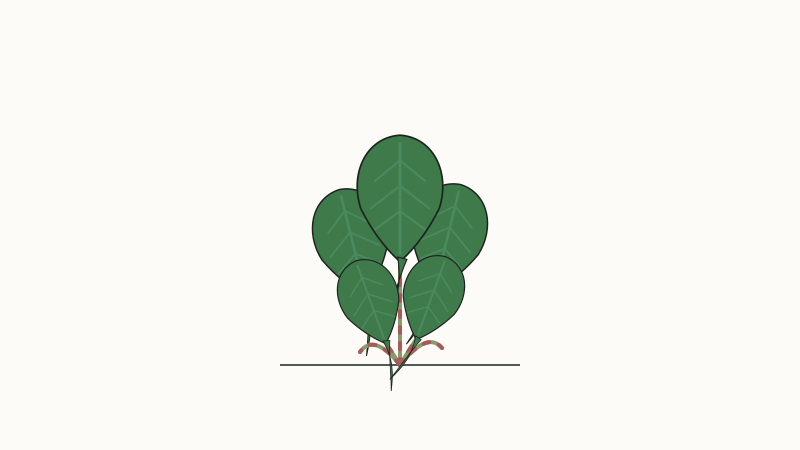
Houseplant growing guide
Alocasia stingray
Alocasia macrorrhizos 'Stingray' · Araceae
Sun
Bright indirect to part sun
Season
Year-round in frost-free climates
Maturity
2 to 5 years
Water
High
Soil pH
5.6 to 7.0
Spacing
3 to 4 ft
By Dandre Noah
Planting alocasia stingray
Stingray is a cultivar of Alocasia macrorrhizos, giant taro, selected for a mutation that draws each leaf tip out into a narrow tail. It inherits the species' appetite: plant it in a big pot of rich, moisture-retentive but draining mix, or in the ground in zones 9 to 11 in part shade. Short stolons end in small cormlets that grow into new plants, so propagation is simply a matter of separating them. Give it a bright spot out of harsh midday sun and temperatures above 60 F, and expect it to outgrow a small space quickly.
Planting details
- Plant in a large container or a shaded garden spot; it reaches 3 to 5 feet indoors and much more outside
- Separate the cormlets that form on stolons to propagate
- Rich, moist, well-drained soil; it is a heavy feeder in summer
- Hardy in zones 9 to 11; lift the corm or bring the pot in for winter elsewhere
- Keep above 60 F and away from drafts indoors
Growing requirements
Stingray takes more light than the forest-floor alocasias: bright indirect indoors, or part sun outside with shade in the hottest hours. Like its giant taro parent it is greedy for water and food in the growing season, so water deeply and regularly and feed every couple of weeks through summer. Humidity of 50 percent or better keeps the big blades clean. The unusual leaf shape is stable, but young plants produce rounder leaves before the tail develops, so do not mistake a juvenile for a different plant.
Harvesting and care
This is one of the faster alocasias, pushing leaf after leaf through summer, and each one unfurls round before the whip tail extends. Trim old leaves at the base and expect replacement growth. Winter slows it sharply indoors; water less and keep it warm. The mottled red-banded stalks are normal coloration, not damage. Spider mites still find the undersides in dry rooms. All parts are toxic, and giant taro relatives demand real respect around children and pets.
Common mistakes
- Assuming round juvenile leaves mean the wrong plant; the tail develops as leaves mature
- Underfeeding a fast-growing heavy feeder
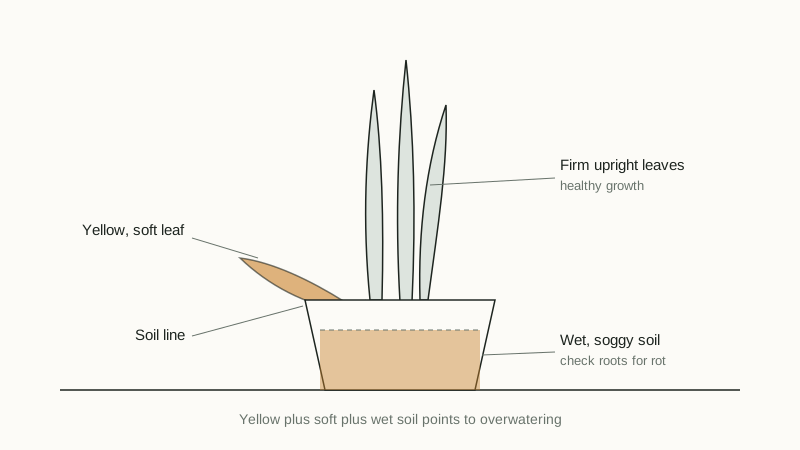
- Letting the mix go bone dry in summer, which collapses the big blades
- Cramping it in a small pot; this is giant taro genetics, not a jewel
- Leaving it out past the first frost in cold zones
Companion plants
Its parent is a landscape plant, so outdoors it groups with odora and regal shield in a tropical border with banana behind it. Indoors it needs elbow room rather than a crowd; a single bold specimen over underplantings of nerve plant or cast iron plant reads better. Whatever the setting, keep it out of nibbling range of pets.
Frequently asked questions
Why does my stingray alocasia not have tails on its leaves?
Young plants produce more conventional leaves first. The signature whip tail develops on mature foliage as the plant sizes up.
Is alocasia stingray the same as zebrina?
No. Both have patterned stalks, but Stingray is a cultivar of A. macrorrhizos with tailed leaves, while zebrina is a separate species with zebra-striped petioles and ordinary arrow leaves.
Is alocasia stingray toxic to pets?
Yes. All alocasias contain calcium oxalate crystals and are toxic to cats and dogs.
How big does stingray get?
The RHS lists it around 1 to 1.5 meters indoors. In the ground in the tropics, its parent species reaches several times that, so give it room.