Houseplant growing guide
Alocasia regal shield
Alocasia 'Regal Shields' · Araceae
Sun
Bright indirect to part sun
Season
Year-round in frost-free climates
Maturity
2 to 4 years
Water
Moderate to high
Soil pH
5.5 to 6.5
Spacing
2 to 4 ft
By Dandre Noah
Planting alocasia regal shield
Regal Shields is a patented hybrid made in 2007 by Florida breeder LariAnn Garner, crossing the giant A. odora with the jewel A. reginula 'Black Velvet'. The result lands between its parents: bigger and faster than a jewel, tougher and darker than odora. Plant it in rich, freely draining mix in a roomy pot or, in zones 10 to 12, directly in the garden where it handles sun better than most alocasias. It rarely produces viable offspring, so propagate by dividing the cormels and offsets at spring repotting. Cold tolerance is notably good for the genus, but frost still kills the top.
Planting details
- Give it a large pot or a garden spot; it builds a rhizome trunk with age
- Divide cormels and offsets in spring; the hybrid is effectively sterile
- Tolerates more direct sun than most alocasias once established
- Hardy outdoors in zones 10 to 12; overwinter the pot indoors elsewhere
- Expect 3 to 4 feet indoors and more in the ground
Growing requirements
Regal Shield earns its keep on adaptability: the patent describes a plant that performs in both shade and sun, which is unusual in this genus. Indoors give it the brightest spot available short of harsh midday sun through glass; outdoors it acclimates to part sun. It drinks more than the jewel alocasias, so water when the top inch dries and feed every few weeks through summer. Average to high humidity suits it, and the thick, durable leaves shrug off conditions that crisp the velvet types.
Harvesting and care
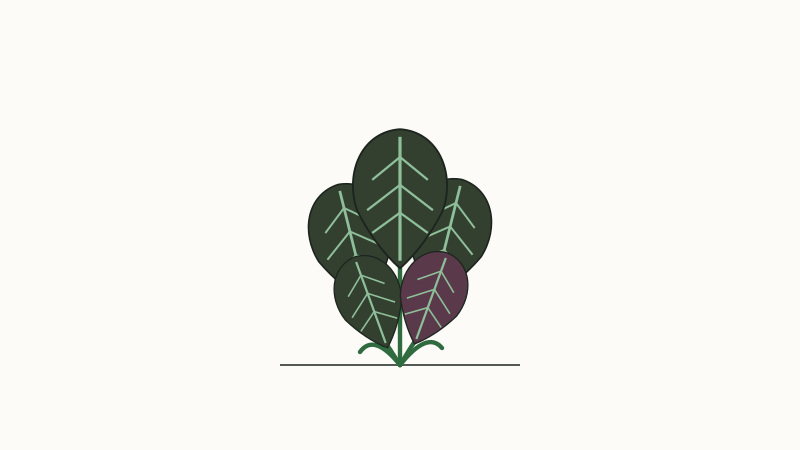
The mature leaves come out dark green suffused with purple, maroon beneath with pale veins, and they hold a long time. Cold snaps below 50 F check growth but rarely kill the plant the way they would a jewel; frost is the hard limit, so bring it in before the first freeze or grow it in the ground in zone 10 and warmer. Its thick leaves show modest resistance to spider mites compared with thin-leafed alocasias, but check anyway. All parts are toxic to pets.
Common mistakes
- Assuming hybrid vigor means no care; it still rots in waterlogged mix
- Leaving the pot out into frost; tougher does not mean hardy
- Starving a heavy feeder; pale slow growth usually means it wants food
- Waiting for seed or offsets that never come; divide existing cormels instead
- Deep shade indoors, where the purple tones dull to plain green
Companion plants
Its scale puts it in a different league than the jewels, so pair it with other big foliage: bird of paradise for the sun side or monstera for the shade. In a frost-free garden it fills the role odora plays, underplanted with cast iron plant in the deep shade at its feet. The usual alocasia rule applies: keep the whole stand away from pets.
Frequently asked questions
Is regal shield a patented plant?
Yes. It is protected by US Plant Patent PP27,050 as 'Regal Shields', bred by LariAnn Garner from Alocasia odora x A. reginula 'Black Velvet'.
Can alocasia regal shield take full sun?
More than most alocasias, yes, especially outdoors where it acclimates to part sun. Indoors, harsh midday sun through glass can still scorch it.
Is alocasia regal shield toxic?
Yes. It contains calcium oxalate crystals like every alocasia and is toxic to cats and dogs.
Why does regal shield not produce seeds?
The cross appears to be sterile, likely from mismatched chromosome counts between its parents. Propagate it by dividing cormels or offsets.