Tree growing guide
Black Hills spruce
Picea glauca 'Densata' · Pinaceae
Sun
Full sun
Season
Evergreen
Maturity
Slow; 20 to 40 ft over decades
Water
Low to moderate
Soil pH
5.5 to 7.5
Spacing
10 to 15 ft for a screen or windbreak
By Dandre Noah
Planting black hills spruce
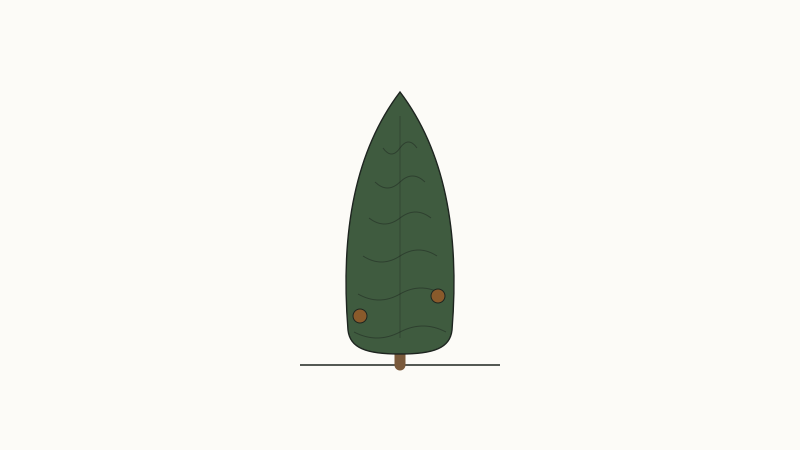
Black Hills spruce is a dense, slow growing selection of white spruce from the Black Hills of South Dakota, one of the toughest conifers for cold climates: Oregon State's landscape guide rates white spruce hardy to zone 2, and it shrugs off wind, cold, drought, and crowding better than most evergreens. Plant in spring or early fall in full sun and well drained soil, spacing 10 to 15 feet for a windbreak. The honest limit is heat: NC State Extension warns the species cannot tolerate hot, humid summers, so treat it as a zones 2 to 6 tree.
Planting details
- Extremely cold hardy, to about zone 2; struggles in hot humid climates
- Slow growing and dense; reaches 20 to 40 ft in the landscape
- Space 10 to 15 ft for screens and windbreaks
- Tolerates wind, drought, cold, and exposure better than most spruces
- Needs air circulation through the dense foliage
Growing requirements
Full sun is best, though it tolerates light shade. Moist but well drained, acidic to neutral soil suits it, and once rooted it handles dry, windy, exposed sites that burn out fussier conifers. The non-negotiable is climate: it wants cool summers and real winters, and resents the hot, humid summers of the Southeast as well as pollution and salt spray. In the right zone it is nearly carefree; in the wrong one it declines slowly and no amount of care fixes it.
Harvesting and care
Little pruning is needed; the tree holds its dense pyramid on its own. Avoid shearing into bare inner wood, since spruce does not push new growth from old wood. Water deeply while young, then let its drought tolerance take over. The pests worth watching are spider mites, which are common and can seriously injure the tree per NC State Extension, plus yellow-headed spruce sawfly, spruce budworm, and the occasional needle rust or canker. Crush a needle and it smells faintly skunky; that is normal for the species.
Common mistakes
- Planting it in the Southeast or other hot, humid climates; it wants cool summers
- Shearing into bare wood, which does not regrow
- Crowding it into a tight hedge with no airflow, inviting spider mites
- Expecting a fast privacy screen; it is slow and dense, not quick
- Watering obsessively once established; it tolerates drought well
Companion plants
Use Black Hills spruce as the evergreen backbone of a cold-climate border or windbreak, then layer deciduous trees and shrubs in front of it. At its shaded feet, tough ground covers like hostas and sedums handle the dry root zone. Give it neighbors that can also take wind and cold; it earns its keep where delicate ornamentals fail.
Varieties worth growing
- Conica (Dwarf Alberta spruce): dense dwarf cone to 10 to 12 ft; very mite prone
- Pendula: weeping white spruce with stiff drooping branches
- Echiniformis: low bun shaped dwarf for rock gardens
- Jean's Dilly: like Conica but slower, with shorter twisted needles
Frequently asked questions
How is Black Hills spruce different from Colorado blue spruce?
Black Hills is a white spruce (Picea glauca 'Densata'): greener needles, a denser and narrower habit, slower growth, and slightly different fragrance. Both are cold hardy, but Black Hills tolerates crowding and exposure a bit better while sharing the same dislike of hot, humid summers.
How fast does Black Hills spruce grow?
Slowly, on the order of 6 to 12 inches a year. The tradeoff is a dense, symmetrical tree that needs almost no shaping and lives for decades.
Why is my Black Hills spruce turning brown inside?
Some inner needle drop each fall is normal, since spruce shed older interior needles. Browning that spreads from the tips or involves whole branches usually means spider mites, winter burn, or drought stress in a newly planted tree.
Is Black Hills spruce deer resistant?
Mostly. NC State Extension lists deer resistance among its strengths, though it also notes deer may browse the foliage in hard winters. It is far safer from deer than an arborvitae but not bulletproof.